
- About Us
- Solutions
-
Products
Products
- Applications
-
News
News
-
Contact Us
Contact Us

Check out fresh news of Alphacell International.
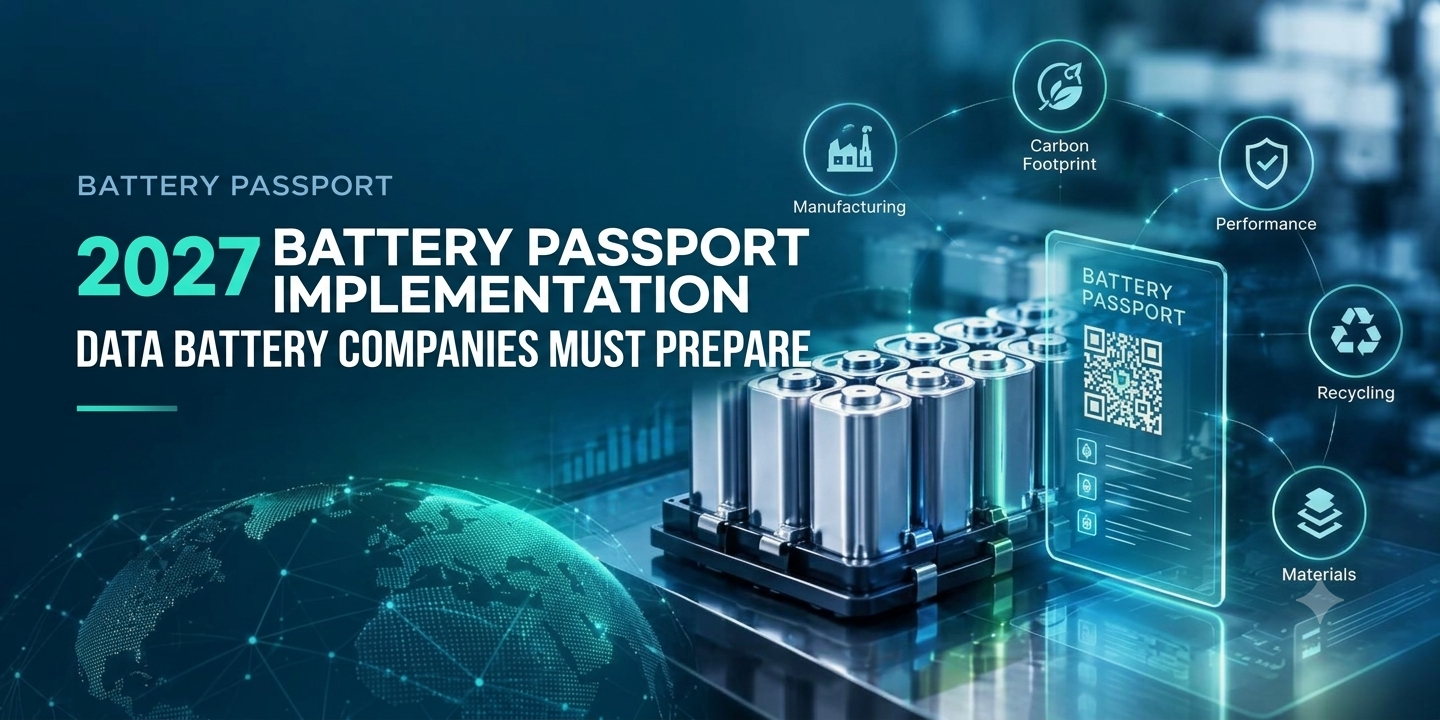
The European Union (EU) is expanding battery regulations beyond product performance and safety to cover information throughout a battery's entire life cycle,
including carbon emissions, raw materials, production, and usage history.
In particular, from February 18, 2027, battery passports will become mandatory for certain categories of batteries.
Companies involved in batteries and battery packs connected to the European market should therefore begin preparing the necessary data and management systems in advance.
1. What Is a Battery Passport?
A Battery Passport is a digital record that provides access to key information about a battery.
Under the EU Batteries Regulation (Regulation (EU) 2023/1542), battery passports will be required from February 18, 2027, for the following categories of batteries placed on the EU market or put into service:
- Electric vehicle (EV) batteries
- Light means of transport (LMT) batteries
- Industrial batteries with a capacity greater than 2 kWh
A Battery Passport may contain information about both the battery model and individual batteries. Access is provided through a unique identifier linked to a QR code.
However, not all information is publicly accessible. Access rights are differentiated according to the nature of the data, including information available to the general public, information accessible to notified bodies and market surveillance authorities, and information available to operators with legitimate interests.
2. Why Is Carbon Footprint Data Becoming More Important?
The EU Batteries Regulation identifies carbon footprint as an important element of battery management.
The assessment goes beyond emissions generated during battery manufacturing.
It also considers the total energy delivered over the battery's expected service life, with carbon footprint information managed across relevant life-cycle stages.
For batteries subject to the applicable requirements, the regulatory framework is also progressing toward the application of carbon footprint performance classes.
As a result, battery manufacturers need more than the ability to manufacture products.
They must also establish systems to trace, collect, and calculate environmental data associated with raw materials and manufacturing processes.
3. What Information Will a Battery Passport Contain?
In August 2026, the European Commission published guidance to support Battery Passport preparation, outlining a total of 71 data points related to the Battery Passport framework.
The specific data requirements vary depending on the battery category and the nature of the information. However, a Battery Passport may include the following types of information:
- Manufacturer and battery model information
- Manufacturing facility and production information
- Battery carbon footprint
- Battery performance and durability data
- Raw materials and composition information
- Recycling and reuse information
- Battery condition and usage-related information
- Regulatory compliance and conformity information
The EU framework also establishes data access and management requirements to support the use of Battery Passport information during battery reuse, remanufacturing, and recycling.
4. What Should Battery Companies Prepare Now?
The Battery Passport is not simply about creating new data when the requirements take effect in 2027.
The key is to establish a systematic approach to collecting, organizing, and managing data generated throughout product development and manufacturing.
For battery and battery pack development, companies should identify in advance where the required information originates, who is responsible for managing it, and how it can be provided to customers.
(1) Product Information
Cell and pack models, specifications, manufacturers, and manufacturing facilities.
(2) Raw Materials and Composition
Information on key materials and components used in batteries.
(3) Environmental Data
Carbon footprint data and environmental information associated with raw materials and manufacturing processes.
(4) Performance and Lifetime Data
Capacity, performance, durability, and battery condition data.
(5) Regulatory Compliance Documentation
Conformity documentation, hazardous substance information, and other materials required to address applicable EU regulations.
Ultimately, in the battery industry, the ability to provide and trace reliable product data is becoming an increasingly important competitive factor alongside technical product specifications.
5. Why Should Companies Start Preparing Before 2027?
Materials published by the Korea Battery Industry Association also emphasize the importance of carbon footprint calculations and obtaining environmental data related to hazardous substance analysis
ahead of Battery Passport implementation.
In addition, customer requests for carbon emissions and hazardous substance data are extending beyond battery manufacturers to their suppliers, even before the regulations take effect.
Companies within the scope of the Battery Passport requirements should not wait until the implementation deadline to prepare their data.
Instead, they should evaluate how the necessary information will be collected and managed from the product development and manufacturing stages onward.
For battery packs in particular, data requirements may extend beyond the cells themselves to include pack components and manufacturing processes.
Organizing technical documentation and environmental and regulatory data from the development stage can help companies respond more effectively to future customer requirements.
The regulatory direction of the battery industry is shifting beyond product safety and performance toward data-driven management of product history and environmental information.
With mandatory Battery Passports approaching in 2027,
companies connected to the European market should begin identifying the data required for their products and preparing a data management framework that covers the entire chain:
Raw Materials → Manufacturing → Performance → Environmental Information → Reuse and Recycling
Alphacell International Co., Ltd. supports battery product development through a range of services,
including battery selection, battery pack development and manufacturing, technical documentation review, and support for relevant certification and regulatory requirements.
For inquiries, please contact us via Contact Us or support@alphacell.co.kr.
#BatteryPassport #EUBatteriesRegulation #BatteryRegulations #BatteryIndustry #CarbonFootprint #BatteryData #BatteryPack #SecondaryBatteries #Alphacell #ElectronicComponents #BatteryPackDevelopment


 Google map


