
- About Us
- Solutions
-
Products
Products
- Applications
-
News
News
-
Contact Us
Contact Us

Check out fresh news of Alphacell International.
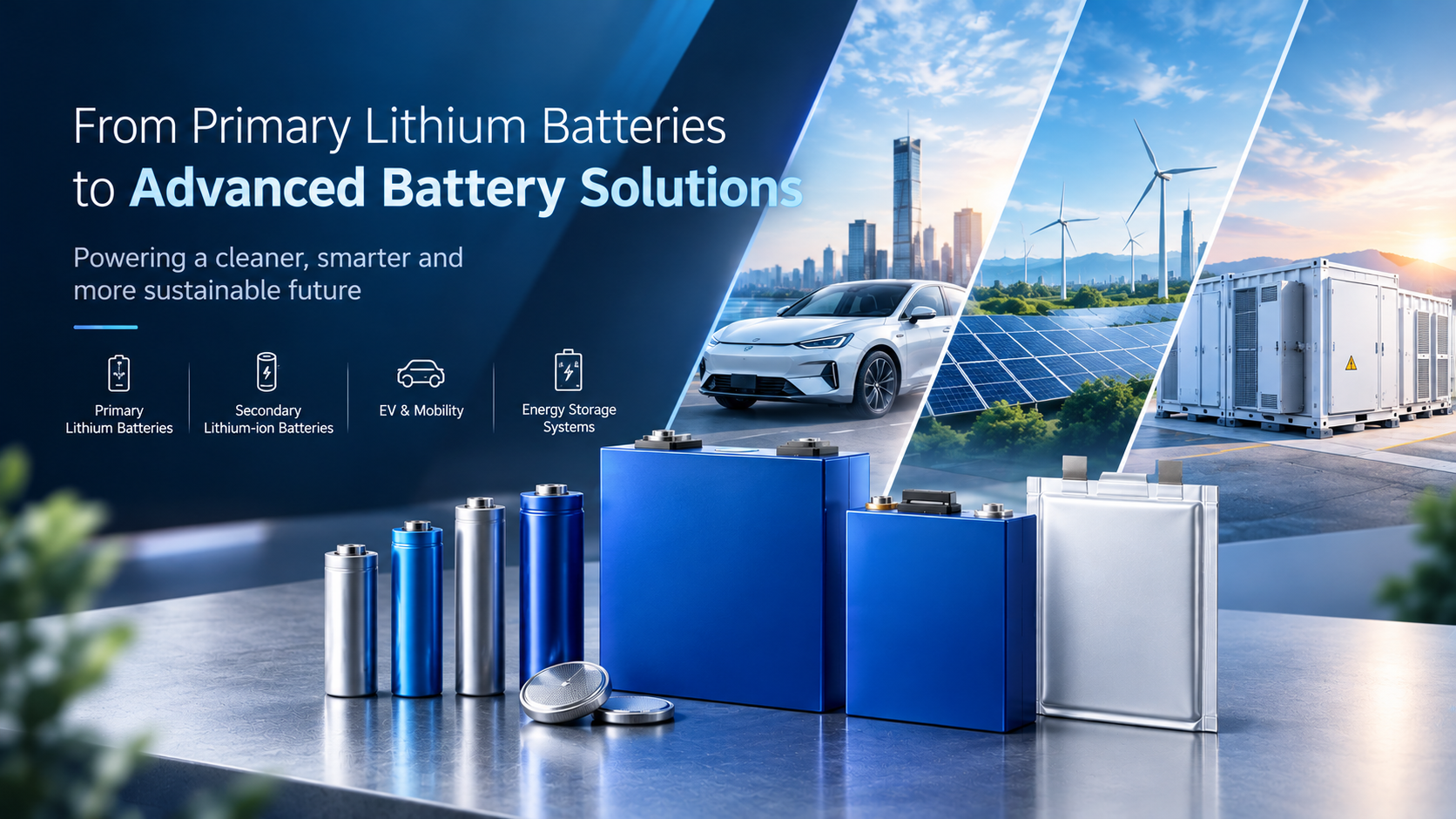
A Growing Battery Manufacturer Expanding Across Consumer, Mobility, and Energy Storage Markets
EVE Energy is a Chinese battery manufacturer with a broad portfolio spanning primary lithium batteries, rechargeable lithium-ion cells, power batteries, and energy storage solutions.
Founded in 2001, the company initially focused on primary lithium batteries before expanding into consumer lithium-ion batteries, power batteries, and large-scale energy storage systems.
Today, EVE offers a diverse range of battery technologies and cell formats designed for applications ranging from smart meters and electronic devices to power tools, electric vehicles, and energy storage systems.
In this article, we look at EVE Energy's history, its primary and secondary battery businesses, and its major product categories.
1. EVE Energy: Company History and Development
EVE Energy was established in 2001 and began producing primary lithium batteries in 2003. The company was listed on the Shenzhen Stock Exchange's ChiNext market in 2009.
Since then, EVE has steadily expanded its manufacturing capabilities and product portfolio, moving beyond primary batteries into rechargeable lithium-ion batteries and larger power battery systems.
Key milestones in its development include:
- 2001: EVE Energy was established.
- 2003: Production of primary lithium batteries began.
- 2007: Its primary lithium battery production base began operations.
- 2009: The company was listed on the Shenzhen Stock Exchange's ChiNext market.
- 2010: Production of consumer lithium-ion batteries began.
- 2015: EVE entered the power battery business.
- 2016: Development of high-performance cylindrical lithium-ion power batteries was initiated.
- 2018: Production lines for prismatic NCM and pouch NCM cells entered operation.
- 2020–2022: EVE expanded its automotive battery business and established additional partnerships with automotive manufacturers.
- 2024: Its 60 GWh energy storage battery manufacturing project began production.
- 2025: The company identified large cylindrical and large prismatic cells as key areas of mass-production development.
This progression illustrates how EVE has developed from a primary lithium battery manufacturer into a company serving multiple segments of the global battery industry.
2. Primary and Secondary Batteries: What Is the Difference?
EVE's product portfolio includes both primary batteries and rechargeable secondary batteries. Although both store and deliver electrical energy, they differ in how they are used and the applications they support.
[Primary Batteries — Designed for Long-Term, Non-Rechargeable Use]
Primary batteries are designed for use until their stored energy is depleted. They are not intended to be recharged during normal operation.
EVE's primary lithium battery portfolio includes lithium-thionyl chloride (Li-SOCl₂) and lithium-manganese dioxide (Li-MnO₂) batteries, as well as specialized battery and capacitor solutions.
These batteries are suited to applications where long service life, low self-discharge, and reliable operation are important.
Typical applications include:
- Smart meters and utility metering equipment
- Industrial monitoring and sensing devices
- Security and alarm systems
- Internet of Things (IoT) devices
- Equipment requiring long-term, low-maintenance power
For example, lithium-thionyl chloride batteries are commonly used in applications requiring long operating life and stable power delivery.
[ Secondary Batteries — Designed for Repeated Charging and Discharging]
Secondary batteries can be recharged and reused over multiple charge-discharge cycles.
EVE's rechargeable battery portfolio includes small lithium-ion batteries, cylindrical cells, prismatic cells, pouch cells, and battery systems.
Depending on the cell chemistry and design, these products can support applications requiring different combinations of energy capacity, power output, cycle life, and charging performance.
Typical applications include:
- Consumer electronics and wearable devices
- Power tools and outdoor power equipment
- Electric two-wheelers and other mobility applications
- Electric vehicles
- Industrial equipment
- Energy storage systems (ESS)
The choice between a primary and a secondary battery depends on the application's operating pattern, maintenance requirements, energy demand, and expected service life.
3. EVE Energy's Major Product Categories
EVE's portfolio extends beyond a single battery chemistry or cell format. Its products can be broadly organized into consumer batteries, power batteries, and energy storage solutions.
① Primary Lithium Batteries
EVE supplies primary lithium batteries for applications requiring long service life and reliable operation.
Its product range includes Li-SOCl₂ and Li-MnO₂ batteries, with different cell formats and specifications available for various equipment requirements.
These batteries are particularly relevant to industrial electronics, metering, sensing, and other applications where battery replacement may be difficult or infrequent.
② Small Lithium-Ion and Cylindrical Cells
EVE also manufactures rechargeable lithium-ion batteries for consumer electronics, power tools, and other portable equipment.
Its cylindrical cell portfolio includes formats such as 18650 and 21700, with different models designed to meet varying capacity and discharge requirements.
The appropriate cell depends on the intended application, including available installation space, required runtime, operating current, charging conditions, and cycle life.
③ Prismatic LFP Cells
Lithium iron phosphate (LFP) batteries are an important part of EVE's rechargeable battery portfolio.
EVE's prismatic LFP product range includes models such as LF105, LF100LA, LF230, LF304, MB31, LF235L, and LF356L, as listed in its European product catalog.
These cells are relevant to applications such as energy storage systems, industrial power systems, and other battery packs requiring suitable combinations of capacity, service life, and system-level performance.
However, individual models differ in dimensions, capacity, electrical characteristics, and intended applications. Selection should therefore be based on the specific product datasheet and system requirements.
④ NCM and Other Power Battery Cells
In addition to LFP, EVE offers nickel-cobalt-manganese (NCM) lithium-ion cells in prismatic, pouch, and cylindrical formats.
These product categories support different design requirements across automotive, mobility, and other power applications.
The choice between LFP and NCM depends on the complete application design, including energy density, safety requirements, operating conditions, cycle life, cost, and pack architecture.
Neither chemistry is universally suitable for every application.
⑤ Large Cylindrical Cells and Energy Storage Systems
EVE has also expanded its activities in large cylindrical batteries and large-capacity energy storage cells.
In the energy storage sector, the company has developed large-capacity cells intended to help reduce the number of cells and simplify battery pack and system integration.
EVE announced the production launch of its 60 GWh energy storage battery manufacturing project in December 2024.
The announcement also introduced its 628 Ah large-capacity energy storage cell, known as Mr. Big.
These developments reflect the industry's broader move toward larger cells and more integrated battery systems for stationary energy storage.
4. Where Is EVE Energy Today?
EVE Energy's current business covers several connected areas of the battery value chain.
Its portfolio includes primary lithium batteries, rechargeable consumer batteries, cylindrical cells, prismatic LFP and NCM cells, pouch cells, large cylindrical batteries, and energy storage solutions.
This breadth allows the company to address different market requirements, from low-power devices requiring long-term operation to high-capacity battery systems used in mobility and stationary energy storage.
As demand for electrification and energy storage continues to develop, cell selection is becoming increasingly application-specific.
Battery capacity alone is not enough to determine suitability.
Voltage, continuous and peak discharge current, charging limits, temperature range, cycle life, physical dimensions, and safety requirements must all be considered when evaluating a battery for a particular product.
For battery pack developers and equipment manufacturers, reviewing the cell datasheet and confirming compatibility with the intended system are essential steps before final selection.
5. Selecting the Right EVE Cell for Your Application
EVE's wide product range provides options for applications with different power, capacity, and operating requirements.
However, the best choice depends on the intended use rather than the manufacturer or cell format alone.
When evaluating a battery, it is important to consider:
- Required nominal voltage and capacity
- Continuous and peak discharge current
- Charging method and charging time
- Expected operating time and cycle life
- Operating temperature and environmental conditions
- Available installation space and mechanical constraints
- Required protection, monitoring, and certification
For primary batteries, long-term reliability and self-discharge characteristics may be particularly important.
For rechargeable cells, charge-discharge performance, cycle life, and compatibility with the battery management system may be key considerations.
Checking these requirements early can help reduce design changes and improve the suitability of the selected cell for the final product.
Conclusion
EVE Energy has developed from a primary lithium battery manufacturer into a diversified battery company serving consumer electronics, industrial equipment, mobility, automotive, and energy storage markets.
Its product portfolio includes both non-rechargeable primary lithium batteries and rechargeable lithium-ion cells in multiple chemistries and formats.
As battery applications become increasingly diverse, selecting the right cell requires more than comparing capacity or dimensions.
A comprehensive evaluation of electrical performance, operating conditions, service life, and system compatibility is essential.
Alphacell International supports battery selection, battery pack development and manufacturing, technical documentation review, and assistance with relevant certification requirements.
If you are considering EVE cells for a new product or battery pack project, please share your application, target capacity, required output, and operating conditions.
We can help review the requirements and identify suitable battery options.
For inquiries, please contact us via Contact Us or support@alphacell.co.kr
#EVEEnergy #EVEBattery #LithiumBattery #PrimaryBattery #SecondaryBattery #LithiumIonBattery #LFPBattery #NCMBattery #CylindricalBattery #PrismaticCell #BatteryPack #EnergyStorage #ESS #AlphacellInternational


 Google map


